Sunday, August 19, 2018
Conowingo Dam Got us Again
They opened the dam again for the second time in three weeks. The outflow of brown silt and debris is both disgusting and hazardous.


Tuesday, August 14, 2018
Lloyd’s Creek: under appreciated anchorage
Everyone wants to go to still pond but this spot might be better.


Saturday, August 4, 2018
Great day out, couldn’t ask for better
Too bad we had to cut it short for a big party tonight. We are low on diesel and need to get fuel and water tomorrow or later today depending on the conditions and how he setup for the party goes. 

Thursday, August 2, 2018
One Weird Summer
Today is August 2 and the highs this week are in the 80s. We have had maybe one really hot weekend so far, but plenty of rainfall. Last week there was so much rain in Pennsylvania that the Conowingo Dam was opened and gushed out a tremendous amount of debris and silt into the upper bay. Logs, logs, and more logs. So many logs that the Governor's Cup, scheduled for this weekend, has been cancelled. We had planned to snorkel or dive the mud flats this Sunday, but with 0 feet of visibility at the moment we will have to postpone that, hopefully in a couple of weeks the water will clear up and we will be able to see what's what.
Sunday, June 10, 2018
Engine Maintenance is Important
I learned something Memorial Day weekend. We had a three day weekend and went down to worton and then across to the middle river with the intention of going to Schultz’s Crab house only to find that it was very stormy and so everyone spent the night aboard their respective boats.
Monday morning we fired up the engine, motored our to get some room and then raised sail. We sailed until the wind died and then fired up the engine as we were south of Poole Island and quite far from Home.
After about thirty minutes the engine sputtered and died. A few attempts to start it indicated a probable fuel problem. I am not a diesel mechanic. I know how to change the oil and that’s pretty much it. It was time to learn. We assumed, being neophytes, and also without a fuel gauge of any kind, that we were out of diesel. The tank is 50 gallons and according to my dead reckoning method of tracking fuel, we should have had 33 gallons. But hey. We all make mistakes.
We put the 2.5 hp outboard on the dinghy and started pushing. It was about four miles to the nearest fuel dock and they offered no promises that we could get a diesel can to run diesel out to the boat. The approach was a dogleg that would be very hard with the push Boat so we resolved to anchor outside and dinghy in with a couple of random containers and hope the fuel attendant would fill them for us.
It took a significant bribe to a mechanic to borrow his crusty old diesel jerry can, which had leaves in it and no lid. Matt made multiple trips in and out, we tried to filter the diesel as best we could and decant it without getting too much gunk out of it.
We got about 13 gallons into the tank and it still wouldn't start. I realized that we had run the system completely dry and would need to bleed it. With no cell signal, I pulled out ye olde paper engine manual and read about the bleed points. The problem was that the manual was good for the engine itself but I had no understanding of the rest of the system.
The tank is below the engine, the only pump on the engine is a tiny lift pump to the filter. I twiddled that pump for about an hour before I got diesel into the filter. I kept opening the racor (which is above the engine and the tank) and putting more diesel into it.
Eventually, my thumb now red with the signature beta paint, the engine started. We ran it home on pretty high throttle, and as soon as I reduced throttle to catch the mooring, the engine died. Exhausted and without any energy to trouble shoot further, we went home.
The next weekend, the engine wouldn't start. We added more diesel to the tank, scratching our heads in confusion. We pumped the pump for hours. It wouldn't start.
Finally a friend brought us an old hand primer from an outboard fuel tank, which we put onto the downstream barb for the racor, and pumped diesel out of a jug and into the system. Three squeezes in the bleed points were squirting diesel. Thank you jesus. The engine started.
We didn't really run it much that weekend as we were preparing for the upcoming spring cruise.
The following friday we wanted to set out for Lloyd's creek, but the engine wouldn't start. We prepared to put the outboard primer back on while matt went in for a little more diesel in our loose jug to prime with, and left to myself, I decided to pull all the filters and lo and behold the racor filter was black and clogged . . . I don't know what I was thinking. Maybe that they last a lot longer than they do, but it was the original filter. I pulled the engine filter too, replaced both, primed the system and voila! The engine is happy again . . .
So moral of the story -- ENGINE MAINTENANCE IS IMPORTANT.
June 2018 Cruise
Night one, June 6th, was cold enough we lit both of our lanterns for warmth. We left late in the day and made it only as far as Lloyd’s Creek on the Sassafras. 
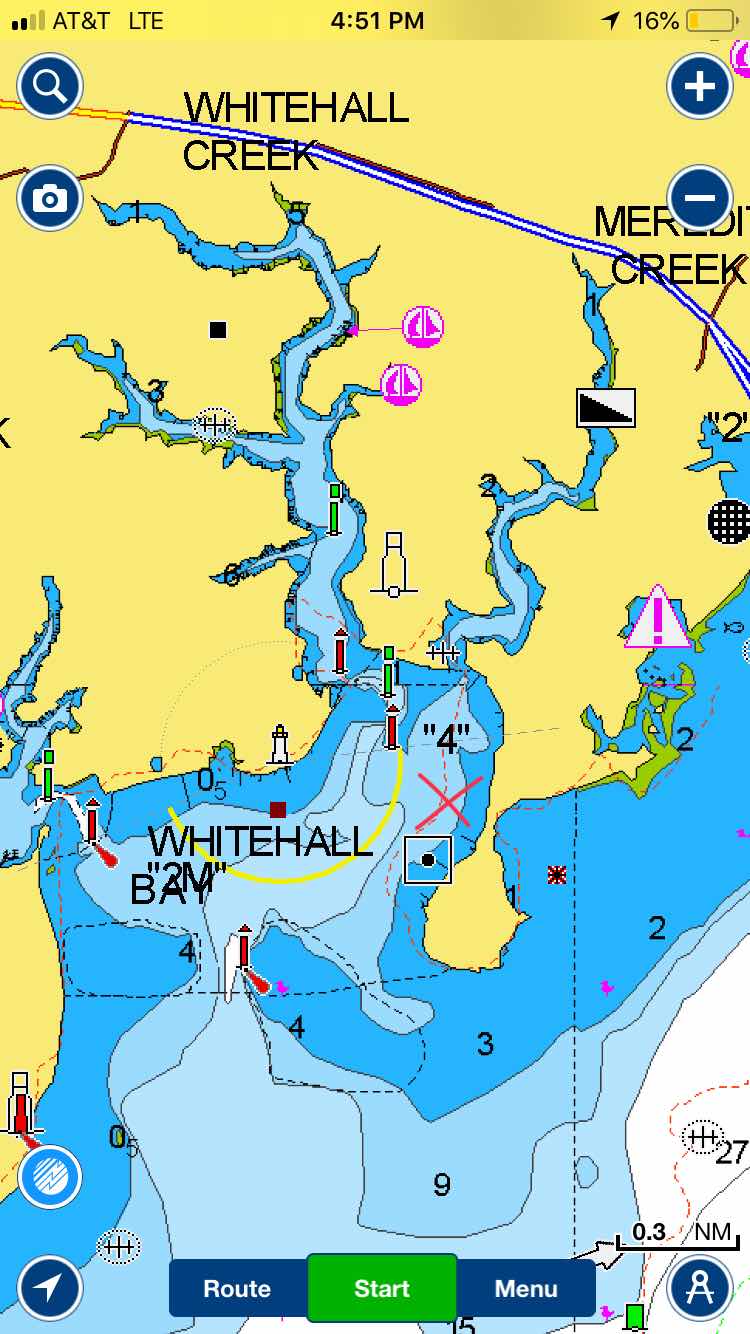
Day two, June 7, we made it under the annapolis bridge in light wind and dropped anchor right inside Whitehall Bay. Something we had not attempted before. It was as a lot of fetch and by the time we went to sleep we were bouncing quite a bit, the beaches were not nearly as tempting from up close as they had appeared from a distance so we did not go ashore on the little neck to the peninsula.


Then we continued on south to the west and south rivers. We went into Galesville to visit our favorite liquor store- it says on the sign that the place is a deli. But it isn’t. It also says on yelp that it is permanently closed but it is not that either. The store is dirty inside and has the feeling of a neighborhood bodega in the Caribbean. When we first met the owner he was convinced that the townspeople were trying to drive him out because someone had put a dead mouse in his trash can. My suggestion that perhaps the mouse had met his demise there naturally was met with hard denial. No. The mouse could not have gotten there on its own it was clearly sabotage. We later sent some friends into his store with instructions to ask about the mouse in the trash, which enraged the proprietor - he ran our friends out of the store without any booze. Sorry, not sorry.

We went to Pirates Cove for lunch and illicit showers, then walked through “town” to Hartge boat yard to pick up some spare fuel filters. “Town” was an antique store and a post office. Won’t hear any complaints from me.


The next morning we headed out early to hit Cambridge Md all the way across the bay. We were going to try Knapp’s narrows. Unfortunately about an hour into the trip, just off Poplar Island, our fleet captain's vessel began to slow down. He realized that his transmission was scorchingly hot and he had to stop. We spent an hour or two drifting on the windless bay, trying to fish and failing.
Ultimately we decided to tow him around the north end of Poplar island so we could drop anchor near Loew's Wharf and dock bar. The water was so shallow we had to anchor probably a mile out from the bar, but the dinghy in was fun and the bar was hopping. They had rooms to rent and several food trucks. It was reminiscent of a smaller, shallower Jellyfish Joel's.


We spent the night comfortably at anchor despite the strange location, and enjoyed seeing cow nosed rays gliding by.
The next day we parted ways, the fleet heading home under sail for repairs. Hobo continued south. We made Solomon's that night, grabbing nearly the last mooring available at Zahniser's.
The next day, for lack of any closer destinations, and since we had never done it before, we headed up the Patuxent from there. There's a bald cypress swamp at the end of Battle Creek, so we did a little sailing and a little motoring all the way up as far as we could get and dropped the hook.


We went from there to Annapolis, which was also a pretty long haul, but Friday night was apparently race night so we were in the thick of things, with people barreling into the harbor under full sail right and left. It was very exciting to watch.


Saturday we made for Still Pond for a final night on the hook and the usual glorious sunset over the bay, then back home to HPYC on Sunday for a sad fare-thee-well to Hobo for another week.


Day two, June 7, we made it under the annapolis bridge in light wind and dropped anchor right inside Whitehall Bay. Something we had not attempted before. It was as a lot of fetch and by the time we went to sleep we were bouncing quite a bit, the beaches were not nearly as tempting from up close as they had appeared from a distance so we did not go ashore on the little neck to the peninsula.
Then we continued on south to the west and south rivers. We went into Galesville to visit our favorite liquor store- it says on the sign that the place is a deli. But it isn’t. It also says on yelp that it is permanently closed but it is not that either. The store is dirty inside and has the feeling of a neighborhood bodega in the Caribbean. When we first met the owner he was convinced that the townspeople were trying to drive him out because someone had put a dead mouse in his trash can. My suggestion that perhaps the mouse had met his demise there naturally was met with hard denial. No. The mouse could not have gotten there on its own it was clearly sabotage. We later sent some friends into his store with instructions to ask about the mouse in the trash, which enraged the proprietor - he ran our friends out of the store without any booze. Sorry, not sorry.
Anyway this year when we visited for ice and prosecco he was on the phone with the court discussing his legal problems. Honestly the timing could not have been more perfect. Can't wait to visit him again.
We went to Pirates Cove for lunch and illicit showers, then walked through “town” to Hartge boat yard to pick up some spare fuel filters. “Town” was an antique store and a post office. Won’t hear any complaints from me.
Then we hauled anchor and made for the Rhode river. The plan was to go behind Big Island this time, a feat we had not previously dared to attempt. It was not bad. It would be a perfect hurricane hole. The approach was visually counter intuitive but we had deep water the whole way in and a lovely little spot to anchor.
The next morning we headed out early to hit Cambridge Md all the way across the bay. We were going to try Knapp’s narrows. Unfortunately about an hour into the trip, just off Poplar Island, our fleet captain's vessel began to slow down. He realized that his transmission was scorchingly hot and he had to stop. We spent an hour or two drifting on the windless bay, trying to fish and failing.
Ultimately we decided to tow him around the north end of Poplar island so we could drop anchor near Loew's Wharf and dock bar. The water was so shallow we had to anchor probably a mile out from the bar, but the dinghy in was fun and the bar was hopping. They had rooms to rent and several food trucks. It was reminiscent of a smaller, shallower Jellyfish Joel's.
We spent the night comfortably at anchor despite the strange location, and enjoyed seeing cow nosed rays gliding by.
The next day we parted ways, the fleet heading home under sail for repairs. Hobo continued south. We made Solomon's that night, grabbing nearly the last mooring available at Zahniser's.
The next day, for lack of any closer destinations, and since we had never done it before, we headed up the Patuxent from there. There's a bald cypress swamp at the end of Battle Creek, so we did a little sailing and a little motoring all the way up as far as we could get and dropped the hook.
Near the bridge up to the Patuxent the river is inexplicably and terrifyingly deep. You could easily swim to shore where we took this depth reading.
The next day we returned to Zahniser's for another night, checked out the Ruddy Duck Brewery via Uber/Lyft for gluten free beer and some actually really great food. Tragically the Tiki Bar in Solomon's is presently closed. The scuttlebutt is that the owner passed away and the boarded up building is now for sale for 3.9 million.
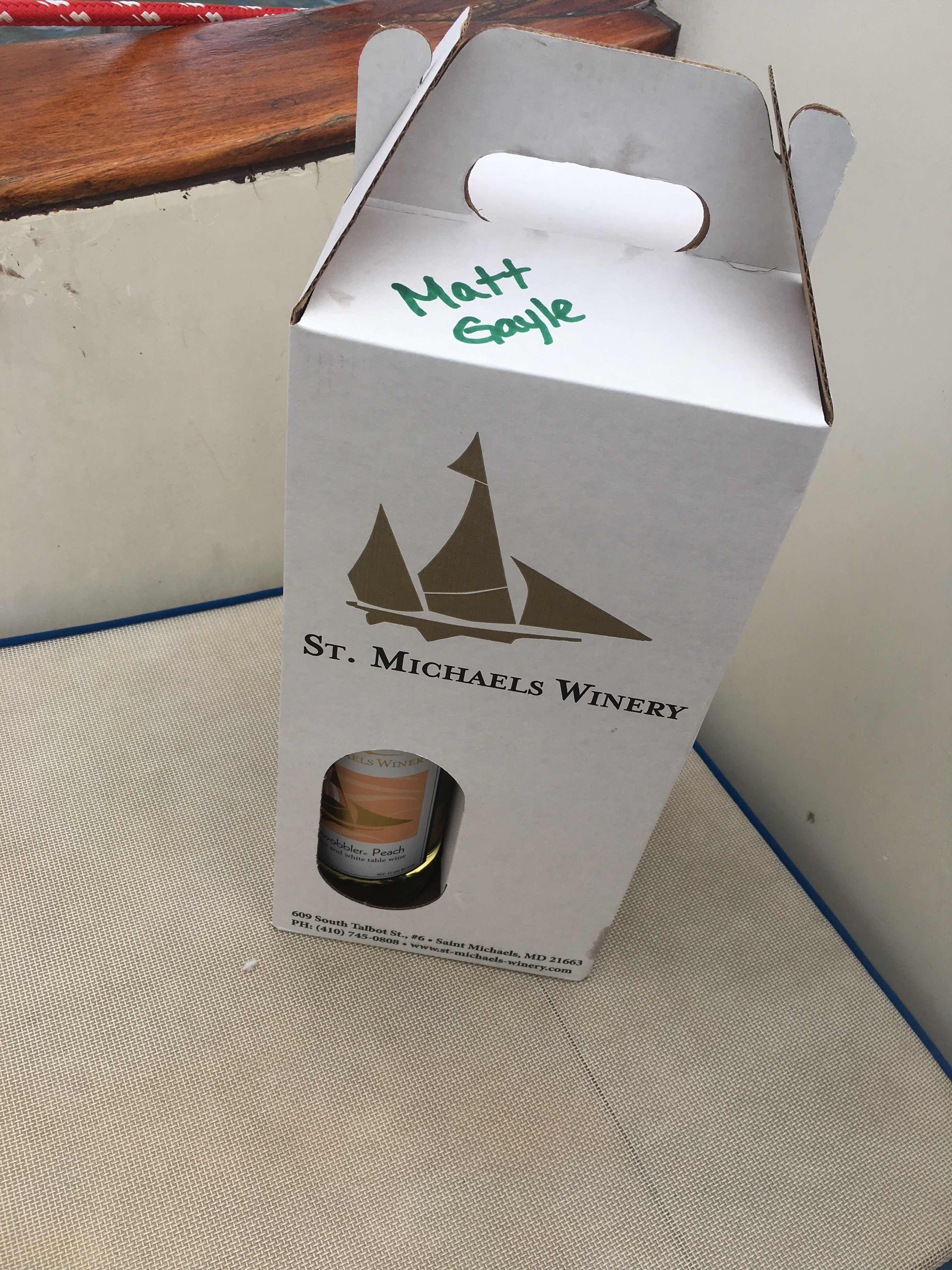
The following day we made a long trip across the bay and up into the Choptank. We had never stayed behind Saint Michaels and it turns out that is definitely the way to go. We had a beautiful anchorage teeming with fish, extremely easy dinghy access to a town dock where we could walk about a block and reach town. No dockage fees. Unfortunately its a much longer haul from our home port to the Choptank than it is to the Miles River so it is definitely a treat we will not get to do again any time soon. We spent two nights there. Did the winery tasting, wandered around town, ate ice cream, and took the dogs to one of the little islands for a run.
We went from there to Annapolis, which was also a pretty long haul, but Friday night was apparently race night so we were in the thick of things, with people barreling into the harbor under full sail right and left. It was very exciting to watch.
Saturday we made for Still Pond for a final night on the hook and the usual glorious sunset over the bay, then back home to HPYC on Sunday for a sad fare-thee-well to Hobo for another week.
Wednesday, April 18, 2018
Diving deep
Until now, the water tank has been for washing dishes and brushing teeth/hand washing because you could fill a glass or bowl with water and wait. Eventually small black rubber particulate would settle out onto the bottom. The particulate was coming from an ancient fill hose made of reinforced layered rubber. With a Herculean amount of effort I got it off of the hose barbs on both ends and got it out. Unfortunately this resulted in an immediate panic since the hoses internal diameter was 1 3/4 inches- a very non standard size. Nobody had replacement hose. Not Lowe’s or West marine or anybody obvious online. 
The hose was too degraded to go back on so I was starting to consider trying to remove the old fittings from the tank and the deck when someone suggested McMaster carr. What a life saver. They actually had several options of food safe hoses in that size. Nothing reinforced and all clear but hey. 5.59 a foot? Sold. I wrapped it in duct tape and it went quite easily Ack through the bulkheads and onto the fittings, being pretty flexible and much thinner than the old hose.


Phew nothing but antifreeze and a few little blobs. I cleaned up what a could and refilled through the new clean hose! Hopefully we can drink the tank water this year and stop using so many plastic bottles of water.

Meanwhile matt has gotten all of the head hoses out and all of the excess through hulls are out. We found a rather bad patch job that necessitated cutting a hole in the hull big enough to stick your head through. The patch looks wonderful.
The hose was too degraded to go back on so I was starting to consider trying to remove the old fittings from the tank and the deck when someone suggested McMaster carr. What a life saver. They actually had several options of food safe hoses in that size. Nothing reinforced and all clear but hey. 5.59 a foot? Sold. I wrapped it in duct tape and it went quite easily Ack through the bulkheads and onto the fittings, being pretty flexible and much thinner than the old hose.
Next step was to open the service port on theyank itself. I built this up in my mind to mean that I was going to find all manner of gunk and or dead mice in and was quite dreading It.
Phew nothing but antifreeze and a few little blobs. I cleaned up what a could and refilled through the new clean hose! Hopefully we can drink the tank water this year and stop using so many plastic bottles of water.
Meanwhile matt has gotten all of the head hoses out and all of the excess through hulls are out. We found a rather bad patch job that necessitated cutting a hole in the hull big enough to stick your head through. The patch looks wonderful.
Wednesday, April 4, 2018
Spring Labors
As we learned two years ago, two coats of barrier coat is not enough. I've been sanding off the bottom paint since last fall. I would say I'm nearly done all the parts that can comfortably be done sitting, standing, or kneeling, without the sander being actually over head. The rest I'm going to try to use a chemical stripper on. I put a small amount on a test area and it plopped onto the ground some time in the middle of the night so I guess my attempt was premature and I have to wait for the temperature to rise a bit.
Seems like over the season we lost the anode off the prop nut. It also dug a hole into the rudder again so I think we might do away with this anode for now. We haven't totally decided on a course of action.
Also last season we had a terrifying day where we were motoring north into heavy winds and pretty decent chop crossing the mouth of the Potomac river, when we discovered that the anchor locker was basically open to the cabin. We took on a tremendous amount of water, but between manually bailing all day and running the bilge pump constantly we made it into port. Turns out the anchor locker is basically shot. The bulkhead was rotten and had a large hole in it, with only a film of wet wood and paint keeping the interior more or less separate. Below the floor of the anchor locker, the lower bulkhead was just a piece of plywood tabbed into place and could be punctured with a fingertip. It was where most of the water was going in. The drains were corroded away and a lot of water was going into the hull also. A full renovation is required.
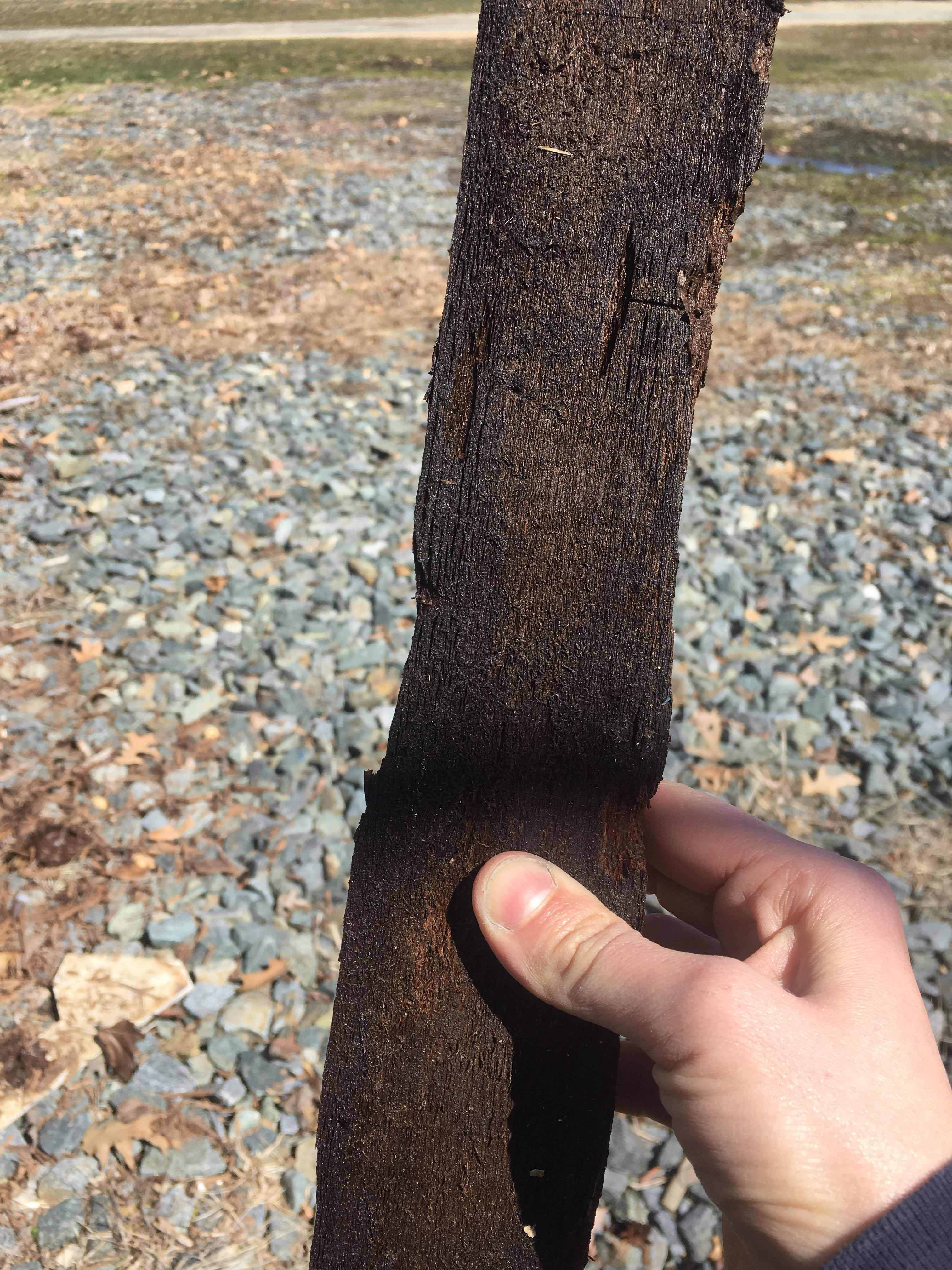
Here's a sample of the cross piece that used to hold up the floor. It felt like a wet sponge and was easily crushed.
This shot is looking down at the interior hull under what had been the bottom of the anchor locker, the lower bulkhead being the rotten looking stuff on the right.
A different angle.
This is what the inside of the vee berth looks like looking forward, after we cut out the rancid old holding tank (time to go to a composting head). The paint is the only thing holding those bulkheads in place. The current plan is to sister them from the anchor locker side, and then eventually add a layer of starboard or something for cosmetic effect on the interior side.
That's the footprint of the old tank. 37 gallons. Lots of new stowage space now!
The remains of the anchor locker floor. Yum.
Subscribe to:
Posts (Atom)